As the school year winds down, one question is probably already on your mind: Will my students keep reading this summer?
It's a fair concern. For students who've worked hard this year, summer break carries real risk. You know that better than most.
At Kids Read Now, we're asking the same question. Below, you'll find strategies grounded in research that you can use right now to keep students reading and growing all summer long. You'll also find resources and programming that make it easier for families to stay engaged, so you can take a well-earned break.
The cost of summer learning loss
Students who made hard-won gains this year risk slipping backward over summer break, especially those already achieving below benchmark.
Without consistent reading practice, students can lose 2 to 3 months of progress. When they return in the fall, the first weeks are often spent reteaching and rebuilding momentum.
That's time struggling readers can't afford to lose.
Research shows that regular reading, especially when families are involved and guided by simple comprehension prompts, does prevent the summer slide. You don't need a new curriculum or extra classroom time. You need the right tools, shared at the right time.
Build Stronger School-Community Partnerships
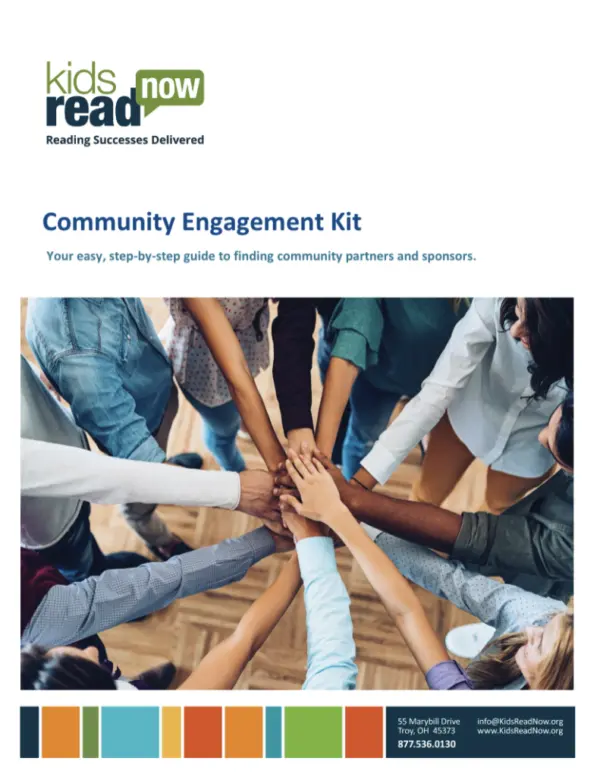
Strong community connections make summer reading programs more effective and more sustainable. Discover how to find local partners and sponsors to support your school's reading programs. This step-by-step guide makes it easy to get your community involved in student success.
The truth about summer reading plans (and why most fail)
Some approaches look good on paper but fall apart at home:
- A packet of worksheets. Ends up under the couch, if it ever leaves the backpack.
- A required reading list. Met with groans from kids and adults alike. Access issues compound the problem.
- A vague suggestion to "read every day." No structure, no accountability.

These plans rely too heavily on families to build reading routines from scratch. That's a lot to ask, especially when summer is meant to be a break.
If students are going to keep reading and thinking, we need a better approach.
What actually works to prevent the summer slide in literacy
Start the conversation early, and make it about identity.
Don't wait for May to start talking about summer reading. Begin while students are still in reading mode.

Right now, while students are well-versed in reading routines, ask them:
"What kind of reader do you want to be over the summer?"
"What's a topic or series you'd love to explore?"
"What kind of books make you feel excited?"
Framing reading as part of who they are, not just something they do in school, helps them carry it across settings and over the months.
Create personal reading plans, and practice.
Through brainstorming and modeling, have each student build a concrete plan.
Use a graphic organizer to prompt them to consider the who, what, when, where, why, and how of summer reading. Guide them to write or draw their plan so they can take it home and share it with their family.
Talk through where they'll keep their plan... on the fridge, with books on a shelf or in a box, taped to the back of their door. Have them practice the plan at home before school ends, then debrief back in class.
Help families understand their role, and take away the pressure.
Families want to help, but they don't always know how. Your communication makes a real difference.
Use simple language like:
"Reading just 15 minutes a day this summer will help [Student Name] keep all the progress they made this year."
"You don't need to teach anything. Just talk to your child about books. Telling stories counts."
"No need to plan long reading sessions. Short, regular practice works better."
The goal is making expectations feel doable, not overwhelming. We cover this and four other common barriers to family engagement in our free resource below.
Get distracted students refocused & learning
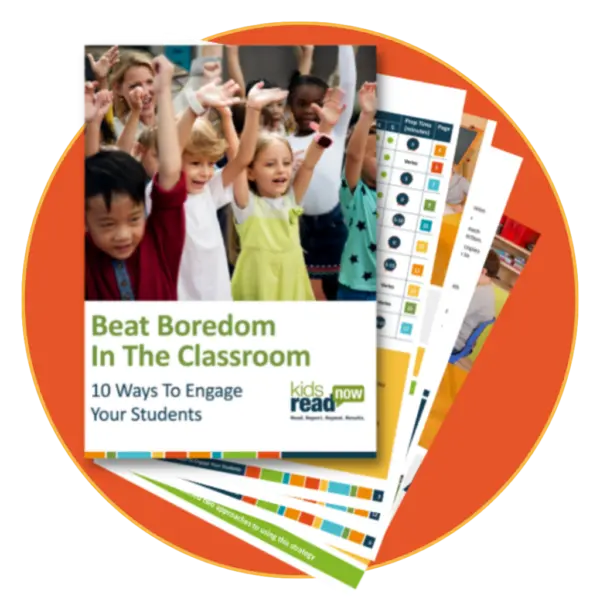
Reignite learning. Sign up to get 10 quickfire academic activities that combine learning with fun. Quick and easy to weave into any lesson.
Make it feel like fun, and build anticipation.
Kids want freedom over the summer. Give it to them on the bookshelf.
Let them choose books that match their interests or sense of humor. If you're not sure what they're into right now, ask.
If your school has access to our book catalog or a library partnership, help students preview their options. Talk up the stories. Make a game out of choosing titles they're curious about.
Reading is more likely to happen when it feels like play, not pressure.
Set a purpose for summer reading, and check back in.
The story doesn't end in May.
Let students know you'll be eager to hear what they read over break. Give them a journal, a reading "passport," or a few sentence starters:
- "The book I liked most was..."
- "This character reminded me of..."
This gives students a clear purpose and helps next year's teacher hit the ground running with connected writing activities in the fall.
What if there was a way to do it all automatically?
Worth saying plainly: teachers need a break too.
You can't monitor reading logs, check in with every family, and track summer progress on your own — not without giving up your own rest and family time.
That's why schools need support systems that extend literacy beyond the classroom without putting it all on you.
Imagine this:
- Every student picks their own books before the school year ends.
- Those books get mailed directly to their homes all summer long.
- Each one comes with story-specific, family-friendly conversation prompts inside.
- Parents get text reminders to keep reading on track. The app translates messages to families in over 100 languages.
- You get to relax, knowing someone else is tracking the progress.
That's exactly what Kids Read Now does.
If your school doesn't have a summer reading solution in place, now is the time to suggest one. This might be the lift you didn't know you needed.
“Kids Read Now offers consistent and replicable positive impacts and is a model that can be scaled.”
Dr. Borman led research into the effects of Kids Read Now. He is a leading education researcher with a focus on educational outcomes, policy, and education inequality.

Recommend a program that’s proven to prevent summer reading loss
As a teacher or instructional leader, you may not make the final call — but your voice matters. It often starts the conversation.
Kids Read Now is a summer literacy program built on Science of Reading principles. It has been proven to prevent summer reading loss for over a decade, especially for struggling readers.
Here's what educators across the country are saying:
Wonderful organization that is working with children and establishing long-term reading habits and knowledge. Love them!
97% of our returning 3rd–5th grade readers maintained or grew their skills over summer. We attribute that to Kids Read Now.
The kids love getting the books throughout the summer, and come in the following school year talking about all the awesome books that they got. I can tell it definitely encourages the kids to read.
Here's a message you can send to your principal or literacy coordinator today. Just copy and paste:
Hi [Name],
I’ve been thinking about ways we can help our students maintain their reading gains over the summer…
I came across Kids Read Now. Their summer program lets students choose their own books and mails them directly home over the summer, along with ways to spark family engagement. They have the evidence to back it up.
Would you be open to scheduling a 15-minute call with their team? It seems like a good fit for our needs.
Let me know how I can help. Thanks!
Your voice carries weight. Connecting decision-makers with the right resources is one of the most direct ways to advocate for your students.
It's never too soon to start
You've worked too hard, and your students have come too far, to risk losing it all to the summer slide.
Start the conversations now. Equip families with the right resources. And if your school doesn't have a summer reading program, recommend one.
No packets. No pressure. Just books, choice, and a whole lot of support.

Want to explore how we can help your school prevent summer reading loss?
Summer reading loss, also known as the summer slide, is the decline in reading skills that can happen when students don't read consistently over summer break. Without regular practice, students below benchmark can lose 2 to 3 months of progress.
Encourage students to choose books they're excited about. Help families understand the importance of consistent reading. And make reading feel fun, not like homework. Tools like reading challenges, family conversation starters, and mailed books help keep the momentum going.
The most effective strategies include letting kids choose their own books, setting aside daily reading time, involving families through shared reading routines, and connecting books to real-life activities. Consistency and enjoyment are key.
Each book mailed home through Kids Read Now includes a Discovery Sheet with simple discussion prompts. Families can report completed books through the mobile app, which supports over 100 languages. Parents also receive automated messages to help them stay on track.
Not at all. Many schools are finalizing summer literacy plans right now. You can connect your leadership team with KRN's outreach staff to explore a tailored plan at this link or by email at [email protected].